
1 Corinthians 1:1–17 — A Christ-Centered Church
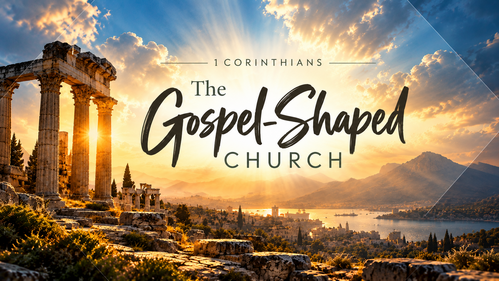
First Corinthians: The Gospel-Shaped Church
This Sunday we begin our journey through 1 Corinthians, and I am excited to see what the Lord has for us in this book. The Apostle Paul wrote to a church living in a prosperous, influential, morally confused culture not unlike ours. The Corinthian church was surrounded by pressures that constantly threatened to shape its thinking and behavior. Paul knew these believers personally. During his second missionary journey he had spent about eighteen months in Corinth preaching the gospel, teaching the Word, and helping establish this congregation (Acts 18:1–11). Now, on his third missionary journey, while ministering in Ephesus, he receives troubling reports about all problems in the church as well as a letter containing questions they wanted him to answer.
Paul does not simply tell them how to solve a collection of church problems. Again and again, he brings them back to the gospel. Before confronting their failures, he reminds them of God’s grace and faithfulness in Christ—who they are, what God has given them, and the One who has called them into fellowship with His Son. Paul, then, shows them that the gospel that saved them must also shape the way they live together.
The first major movement in the book is that THE CROSS CONFRONTS (1–6). Paul addresses the problems that had been reported to him: divisions, pride, worldly ideas about wisdom and leadership, sexual immorality, lawsuits between believers, and compromise with the culture. The problem was not that the church was in Corinth, but that Corinth was in the church. They had begun allowing the values of Corinth to influence how they lived. Paul responds by taking them back to the cross that not only saves them but also shape how they ought to live. Christ crucified confronts everything in us that is inconsistent with belonging to Him.
Paul then begins to answer their questions to say one thing, THE GOSPEL SHAPES the church (7–14). Paul applies the gospel to the everyday life of the church. He deals with marriage and singleness, Christian freedom, idolatry, worship, the Lord’s Supper, spiritual gifts, and the supremacy of love. The message is clear: the gospel is not merely something we believe in order to be saved; it shapes our relationships, our choices, our worship, and the way we treat one another.
Finally, we see that THE RESURRECTION SECURES our future (15–16). Paul brings us to the great hope of the Christian faith: Jesus Christ is risen, and because He is risen, death will not have the final word. Our resurrection is certain, our future is secure, and therefore our service for Christ matters. Paul closes by showing what resurrection hope looks like in everyday ministry—giving, serving, standing firm, loving one another, and continuing the work of the gospel.
As you study this book, my prayer is that you will do more than learn about an ancient church and their problems. I pray that we will allow the Word of God to examine you and that the gospel will increasingly shape who we are as a church. The cross confronts us, the gospel shapes us, and the resurrection secures us.
This Sunday we begin our journey through 1 Corinthians, and I am excited to see what the Lord has for us in this book. The Apostle Paul wrote to a church living in a prosperous, influential, morally confused culture not unlike ours. The Corinthian church was surrounded by pressures that constantly threatened to shape its thinking and behavior. Paul knew these believers personally. During his second missionary journey he had spent about eighteen months in Corinth preaching the gospel, teaching the Word, and helping establish this congregation (Acts 18:1–11). Now, on his third missionary journey, while ministering in Ephesus, he receives troubling reports about all problems in the church as well as a letter containing questions they wanted him to answer.
Paul does not simply tell them how to solve a collection of church problems. Again and again, he brings them back to the gospel. Before confronting their failures, he reminds them of God’s grace and faithfulness in Christ—who they are, what God has given them, and the One who has called them into fellowship with His Son. Paul, then, shows them that the gospel that saved them must also shape the way they live together.
The first major movement in the book is that THE CROSS CONFRONTS (1–6). Paul addresses the problems that had been reported to him: divisions, pride, worldly ideas about wisdom and leadership, sexual immorality, lawsuits between believers, and compromise with the culture. The problem was not that the church was in Corinth, but that Corinth was in the church. They had begun allowing the values of Corinth to influence how they lived. Paul responds by taking them back to the cross that not only saves them but also shape how they ought to live. Christ crucified confronts everything in us that is inconsistent with belonging to Him.
Paul then begins to answer their questions to say one thing, THE GOSPEL SHAPES the church (7–14). Paul applies the gospel to the everyday life of the church. He deals with marriage and singleness, Christian freedom, idolatry, worship, the Lord’s Supper, spiritual gifts, and the supremacy of love. The message is clear: the gospel is not merely something we believe in order to be saved; it shapes our relationships, our choices, our worship, and the way we treat one another.
Finally, we see that THE RESURRECTION SECURES our future (15–16). Paul brings us to the great hope of the Christian faith: Jesus Christ is risen, and because He is risen, death will not have the final word. Our resurrection is certain, our future is secure, and therefore our service for Christ matters. Paul closes by showing what resurrection hope looks like in everyday ministry—giving, serving, standing firm, loving one another, and continuing the work of the gospel.
As you study this book, my prayer is that you will do more than learn about an ancient church and their problems. I pray that we will allow the Word of God to examine you and that the gospel will increasingly shape who we are as a church. The cross confronts us, the gospel shapes us, and the resurrection secures us.
Posted in 1 Corinthians
Recent
1 Corinthians 1:1–17 — A Christ-Centered Church
October 2nd, 2026
Ruth 4:13–22 — The Lineage of Grace
September 25th, 2026
Ruth 4:1–12 — The Cost of Redemption
September 18th, 2026
Ruth 3:1–18 — At the Redeemer's Feet
September 11th, 2026
Ruth 2:8–16 — Finding Refuge in God’s Grace
August 28th, 2026
Archive
2026
February
August
September
2025
October
2024
February
March
April
May
July
October
November
December
Advent 2024 Devotion: December 2Advent 2024 Devotion: December 3Advent 2024 Devotion: December 4Advent 2024 Devotion: December 5Advent 2024 Devotion: December 6John 3:16-21 — For God So Loved the WordAdvent 2024 Devotion: December 7Advent 2024 Devotion: December 8Advent 2024 Devotion: December 9Advent 2024 Devotion: December 10Advent 2024 Devotion: December 11Advent 2024 Devotion: December 12Advent 2024 Devotion: December 13Advent 2024 Devotion: December 14Advent 2024 Devotion: December 15Advent 2024 Devotion: December 16Advent 2024 Devotion: December 17Advent 2024 Devotion: December 18Advent 2024 Devotion: December 19Advent 2024 Devotion: December 20Advent 2024 Devotion: December 21Advent 2024 Devotion: December 22Advent 2024 Devotion: December 23Advent 2024 Devotion: December 24Advent 2024 Devotion: December 25
2023
January
February
March
April