
Turning From Idols to the Living God
After having to leave Iconium due to persecution, (Acts 14:1-7), the Apostle Paul and Barnabas went to Lystra, where "a man was sitting who was ... lame from his mother's womb and had never walked" (Acts 14:8). The scene has striking similarities to Acts 3:1-10 when the Apostle Peter had healed another man who had been lame from his mother's womb. The miracle's similarities to Acts 3 is meant to equate the apostleship of Paul with that of Peter.
The crowd's reaction was to shout in the Lycaonian language, "The gods have become like men." Zeus was the head of the Greek pantheon and Hermes was his son, the god of rhetoric and speech. So, the crowd began calling Paul, Hermes, because he was the spokesman and the younger of the two. And they called Barnabas Zeus. But they also attempted to offer sacrifice to them and worship them had Paul and Barnabas did not "tore their robes" and "with difficulty ... restrained the crowds from offering sacrifices to them" (Acts 14:18). However, just like the crowd in Jerusalem went from shouting, "Hosanna to the Son of David!" (Matthew 21:9) to screaming, "Crucify Him!" (Mark 15:13-20; Luke 23:21; John 19:6), the crowd in Lystra went from worshipping Paul as a god to stoning him (Acts 14:19).
The scene illustrates several things regarding idolatry, the worship of anyone or anything other than the one true God. One, idolatry is a powerful force against spreading the gospel. Although Paul's miracle confirmed his apostleship from God, idolatry had twisted the thinking of the crowds who only wanted miracles that confirms what they want to believe.
Two, the praise of man is fickle. The crowds went very quickly from worshipping Paul to stoning him. Be careful of receiving praise from people. This precludes receiving encouragement, support, and respect. Nevertheless, people do not praise you because you are worthy; only God is worthy of praise, and honor, and worship. They praise you because it fulfills a need in their heart. Instead of praising and worshipping God, idolaters elevate man because they ultimately want to elevate themselves.
Three, idolatry reveals one's heart. The crowd worshipped Paul and Barnabas out of fear. When they found out they were not gods, they had no problem stoning Paul. That is not unlike modern day. The reason why certain idols entice us is because there is a need in our life that we trying to fill with something other than God. People, today, may not worship Ares (the god of war and power), Aphrodite (the goddess of lust and pleasure), and Athena (the goddess of knowledge and handicraft), but they will do anything for fame and fortune, pleasure and power, status and comfort.
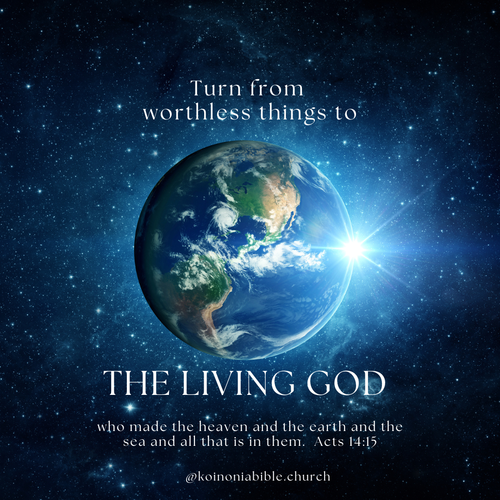
The scriptural response to idolatry today is the same as it was 2000 years ago. Idolators ought to "turn from these worthless things to the living God" (Acts 14:15). Anything, other than the Lord God, that captures your devotion, your love, and your worship is an idol. Ultimately, all idolatry is a form of self-worship. If you are not worshipping God, you are worshipping yourself.
Heart Check:
The crowd's reaction was to shout in the Lycaonian language, "The gods have become like men." Zeus was the head of the Greek pantheon and Hermes was his son, the god of rhetoric and speech. So, the crowd began calling Paul, Hermes, because he was the spokesman and the younger of the two. And they called Barnabas Zeus. But they also attempted to offer sacrifice to them and worship them had Paul and Barnabas did not "tore their robes" and "with difficulty ... restrained the crowds from offering sacrifices to them" (Acts 14:18). However, just like the crowd in Jerusalem went from shouting, "Hosanna to the Son of David!" (Matthew 21:9) to screaming, "Crucify Him!" (Mark 15:13-20; Luke 23:21; John 19:6), the crowd in Lystra went from worshipping Paul as a god to stoning him (Acts 14:19).
The scene illustrates several things regarding idolatry, the worship of anyone or anything other than the one true God. One, idolatry is a powerful force against spreading the gospel. Although Paul's miracle confirmed his apostleship from God, idolatry had twisted the thinking of the crowds who only wanted miracles that confirms what they want to believe.
Two, the praise of man is fickle. The crowds went very quickly from worshipping Paul to stoning him. Be careful of receiving praise from people. This precludes receiving encouragement, support, and respect. Nevertheless, people do not praise you because you are worthy; only God is worthy of praise, and honor, and worship. They praise you because it fulfills a need in their heart. Instead of praising and worshipping God, idolaters elevate man because they ultimately want to elevate themselves.
Three, idolatry reveals one's heart. The crowd worshipped Paul and Barnabas out of fear. When they found out they were not gods, they had no problem stoning Paul. That is not unlike modern day. The reason why certain idols entice us is because there is a need in our life that we trying to fill with something other than God. People, today, may not worship Ares (the god of war and power), Aphrodite (the goddess of lust and pleasure), and Athena (the goddess of knowledge and handicraft), but they will do anything for fame and fortune, pleasure and power, status and comfort.
The scriptural response to idolatry today is the same as it was 2000 years ago. Idolators ought to "turn from these worthless things to the living God" (Acts 14:15). Anything, other than the Lord God, that captures your devotion, your love, and your worship is an idol. Ultimately, all idolatry is a form of self-worship. If you are not worshipping God, you are worshipping yourself.
Heart Check:
- Who do you put your trust in? Is your faith in man or the Living God who made heaven and earth?
- Do you seek the praise of man rather than God? That is a quick path to destruction.
- What are the most important things in your life? Are they taking you away from a complete devotion, love, and worship of God. Remember, "love the Lord your God, with all of …" (Deuteronomy 6:5; Matthew 22:37; Mark 12:30, Luke 10:27).
Posted in Book of Acts
Recent
1 Corinthians 3:5–23 — Whose Church Is It?
October 23rd, 2026
1 Corinthians 1:1–17 — A Christ-Centered Church
October 2nd, 2026
Ruth 4:13–22 — The Lineage of Grace
September 25th, 2026
Ruth 4:1–12 — The Cost of Redemption
September 18th, 2026
Ruth 3:1–18 — At the Redeemer's Feet
September 11th, 2026
Archive
2026
February
August
September
2025
October
2024
February
March
April
May
July
October
November
December
Advent 2024 Devotion: December 2Advent 2024 Devotion: December 3Advent 2024 Devotion: December 4Advent 2024 Devotion: December 5Advent 2024 Devotion: December 6John 3:16-21 — For God So Loved the WordAdvent 2024 Devotion: December 7Advent 2024 Devotion: December 8Advent 2024 Devotion: December 9Advent 2024 Devotion: December 10Advent 2024 Devotion: December 11Advent 2024 Devotion: December 12Advent 2024 Devotion: December 13Advent 2024 Devotion: December 14Advent 2024 Devotion: December 15Advent 2024 Devotion: December 16Advent 2024 Devotion: December 17Advent 2024 Devotion: December 18Advent 2024 Devotion: December 19Advent 2024 Devotion: December 20Advent 2024 Devotion: December 21Advent 2024 Devotion: December 22Advent 2024 Devotion: December 23Advent 2024 Devotion: December 24Advent 2024 Devotion: December 25
2023
January
February
March